0

SWEET DREAMS

Context 
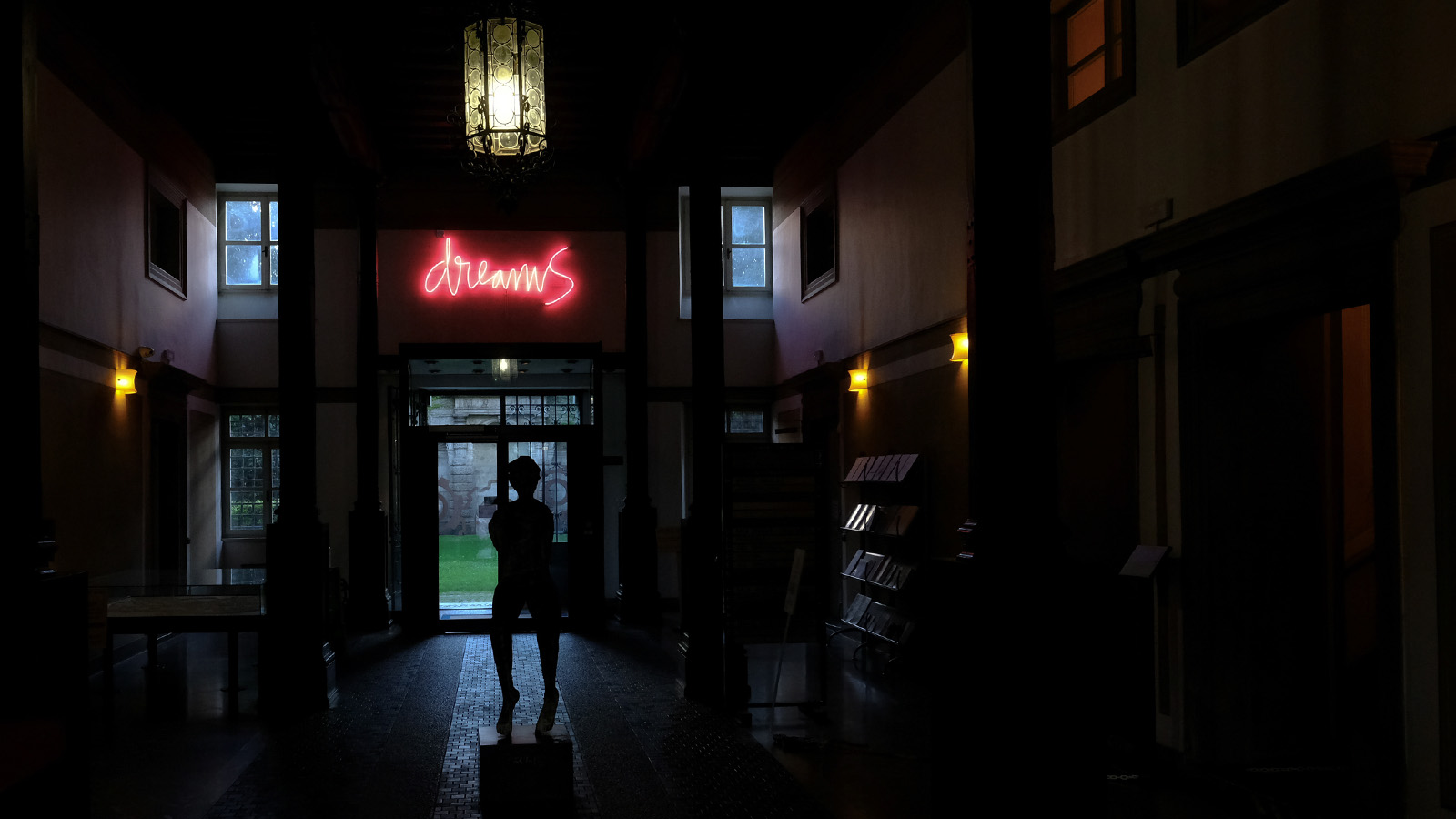
The artwork, created by the social art collective DMAV, plays with the title of a song by the Eurythmics to explore the meaning of dreams, beginning with a question that provokes and stimulates reflection: What are dreams made of? The ability to dream is one of the fundamental traits of an entrepreneur, who, through the capacity to “see” the future, can transform visions into projects that help the community and society grow and prosper. By resonating with their own dreams and thus overcoming personal limitations, it becomes possible to have a positive impact on reality.

Intervention 
The artwork, part of a broader series of public art interventions by the collective in various Italian cities, employs the expressive codes of neon art and text art to enhance a striking location within Palazzo Torriani with an installation that combines multiple languages. In the atrium, a large neon sign evokes the realm of entrepreneurial dreams; on the staircase, seen as a link between the dimension of dreams and visions and the concrete plane of reality, a gradient of blue tones accompanies a series of key words—these are the real ingredients, the very substance of which dreams are made.

Side notes
The installation emerged from a collaborative effort with the members of Confindustria Udine, focusing on the theme of a value-based pact. The impact of the pink neon is particularly striking within the traditionally conservative environment of Confindustria Udine.

Living bodies

Contesto
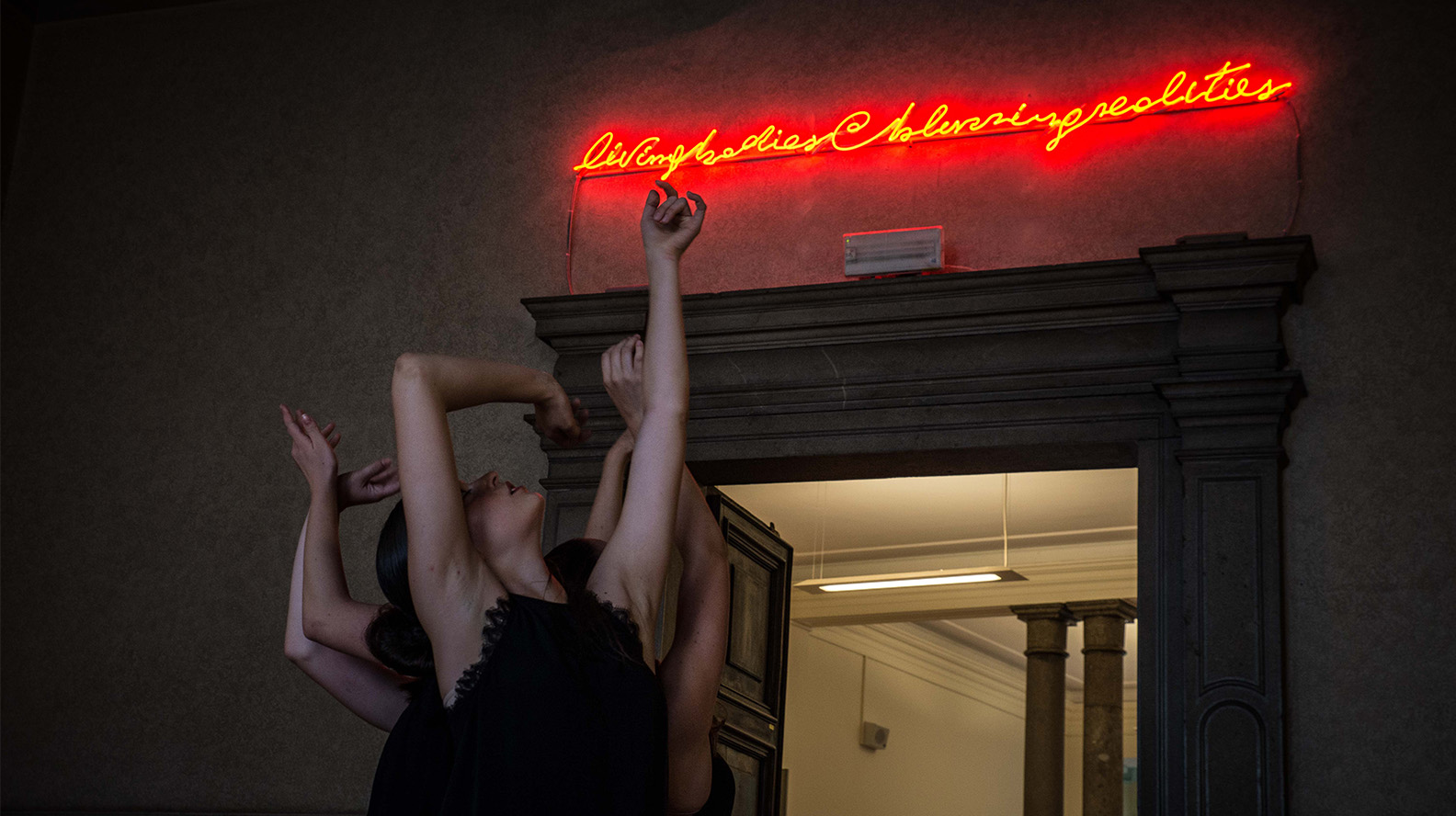
L’installazione site specific per Palazzo Antonini è stata realizzata per L’università di Udine sul tema del rapporto tra la fisicità dei corpi e delle relazioni e la progressiva smaterializzazione che è tipica dei nuovi mondi digitali. L’opera nasce da un dialogo con Antonella Riem, docente universitaria e presidente del Partnership Studies Group.

Intervento 
L’opera è un neon piegato a mano, derivato da una calligrafia d’artista e che si colloca nello spazio prestigioso di Palazzo Antonini, una delle sedi centrali dell’Università di Udine.
L’inaugurazione si è svolta attraverso una performance di danza contemporanea, illuminata e ispirata dalla luce del neon.

Side notes 
Il progetto è frutto di una collaborazione tra artisti. All’opera hanno collaborato DMAV, Isabella e Tiziana Pers, Mattia Mantellato e Piera Giacconi.

Minimalia

Context
The project was born for the second year in collaboration with the University of Udine, within the Festival di conoscenza in Festa. Our research deals with the minimal signals of human communication in a digital acceleration scenario. Faced with the proliferation of digital signals and the acceleration of relationship time, it seems that there are no longer any opportunities to stop and observe what is happening around us. The space of the relationship, stretched like a rubber band by our need to always be present, always available, always callable, is occupied by notifications, send keys, overloaded information.

Intervention 
DMAV, with Minimalia, a widespread and modular exhibition, explores the complexity of this scenario by mixing games of perception, obsessive rituals, digital mysticism, moments of enchanted contemplation.

There are two languages ​​of this intervention:

#MINIMALIA_LITTLE TOWN exhibition at MAKE Exhibition Space.

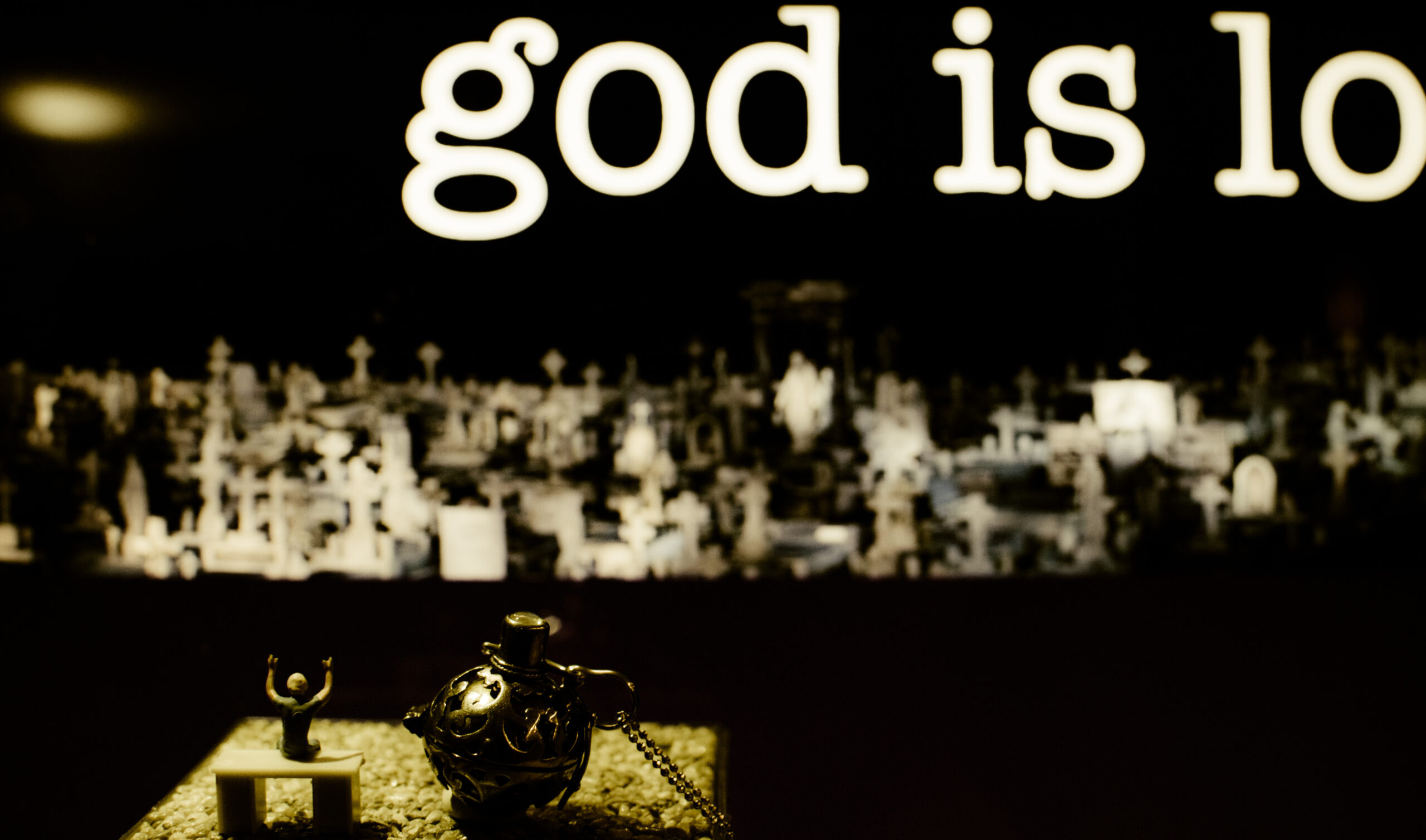
Minimalia_Little Town presents a series of photographic dioramas in which the play between proportions, enlargement, miniature, outsized objects, creates an effect of visual disorientation. What is the correct observation point in these out-of-scale landscapes? The environments of Little Town undoubtedly resemble places of affective and perceptive crossing, in which the inhabitants, intent on unclear activities and absorbed in vaguely neurotic rituals, enter into resonance with enormous screens on which images of a mysterious nature appear: they are projections of desires, hallucinations, lysergic visions? Perhaps the tiny inhabitants of Little Town want to send us a message, pushing us to identify with them starting from the influence exerted by the large images and the experience they are living. At the center of the dioramas, objects that resemble idols or relics of mysterious civilizations create a further element of emotional resonance, making us think that each image is nothing more than the missing piece of a mosaic which, if recomposed, would tell us something surprising about the inhabitants of this miniature city.

#MINIMALIA_TEXTURE Total Room in via delle Pelliccerie in Udine, immersive room.

Minimalia _Texture is an intervention of variable dimensions in which the space of the work becomes the place of apparitions readable on multiple levels. A background printed with natural motifs – which suggest a sensation of exoticism and contemplative calm – hosts the luminous apparition of a sort of pop skull. A skull immersed in a mysterious calculation: perhaps it is a countdown, or a body count of war victims destined to rise inexorably. The digital traces create a short circuit between full and empty, while the different forms that the texture can take – large installation, underground meditation space, room for full sensorial immersion – are so many declinations of a paradoxical experience of the contemporary sacred.

Side notes
This research on the theme of digital mysticism is the opportunity for the meeting between the Collective and Babatwoosh, an Icelandic digital mystic who will accept the invitation to perform for two DMAV performances in Italy.

Numbers

Context
The project was born at the request of Antonella Riem, a professor at the University of Udine who proposes a reflection on the meaning and experience of numbers in our society. With #numbers, social art becomes an opportunity to lead communities to question the possibilities of regeneration and change that each of us can bring within the public dimension. The first performances of the project are held in the University’s main hall and in the spaces of the Ethnographic Museum.

Intervention
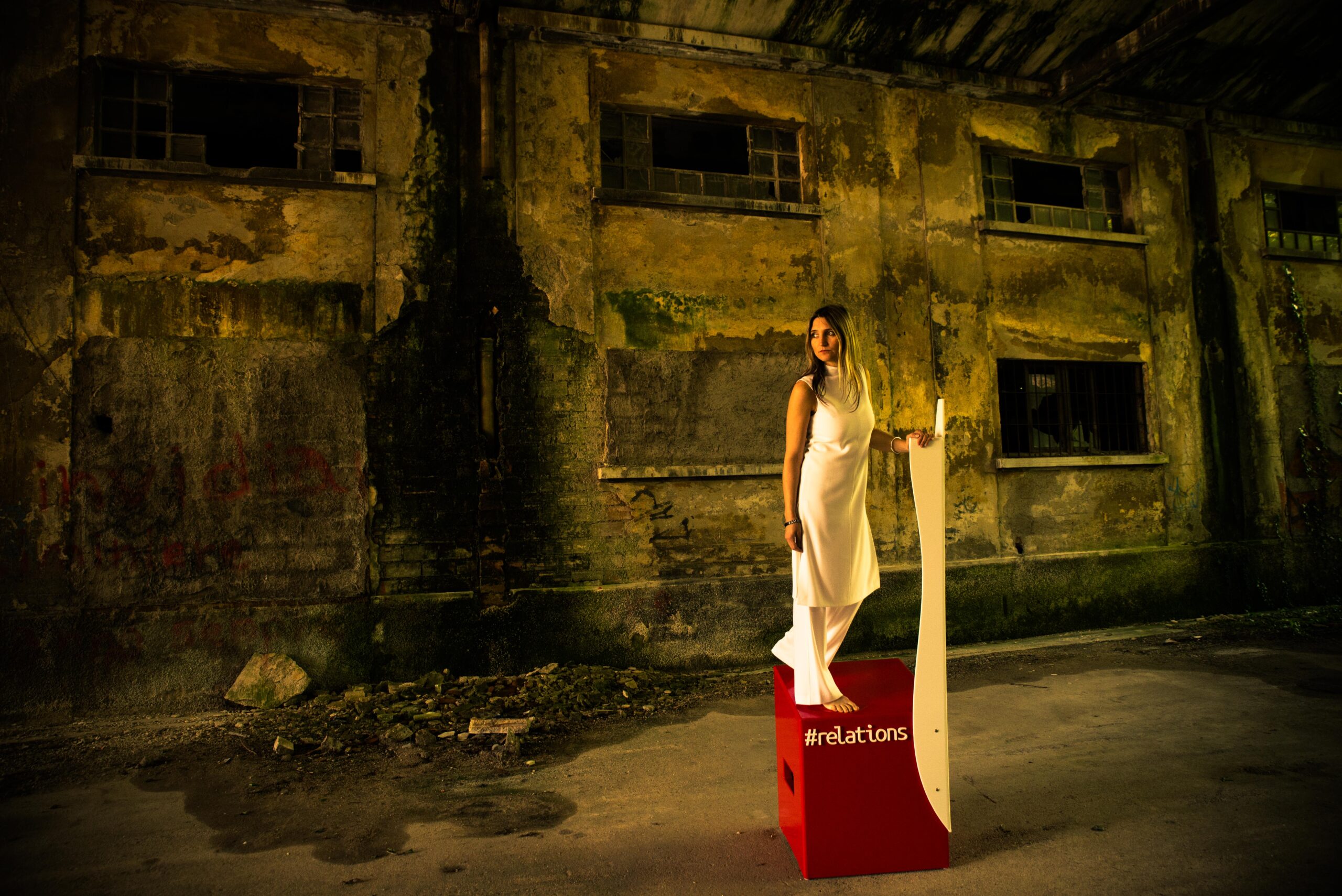
The intervention is composed of two different levels of creative action. First we carry out a series of incursions into spaces to be regenerated in which we set performances and photographic portraits in various spaces in the city of Udine, including the former slaughterhouse and the Rizzi park. Subsequently we carry out a site-specific intervention in Vicolo Sottomonte, which is covered with colored felt numbers. The entire creative process questions the impact and meaning of numbers in the fabric of the community and in urban spaces.

Side notes
With the project, the collective joins the international research group PSG – Partnership Studies Group, inspired by the themes of partnership and the care economy developed by the activist and scholar Riane Eisler. The #numbers experience is subsequently told in an exhibition set up at the Ethnographic Museum of Udine.